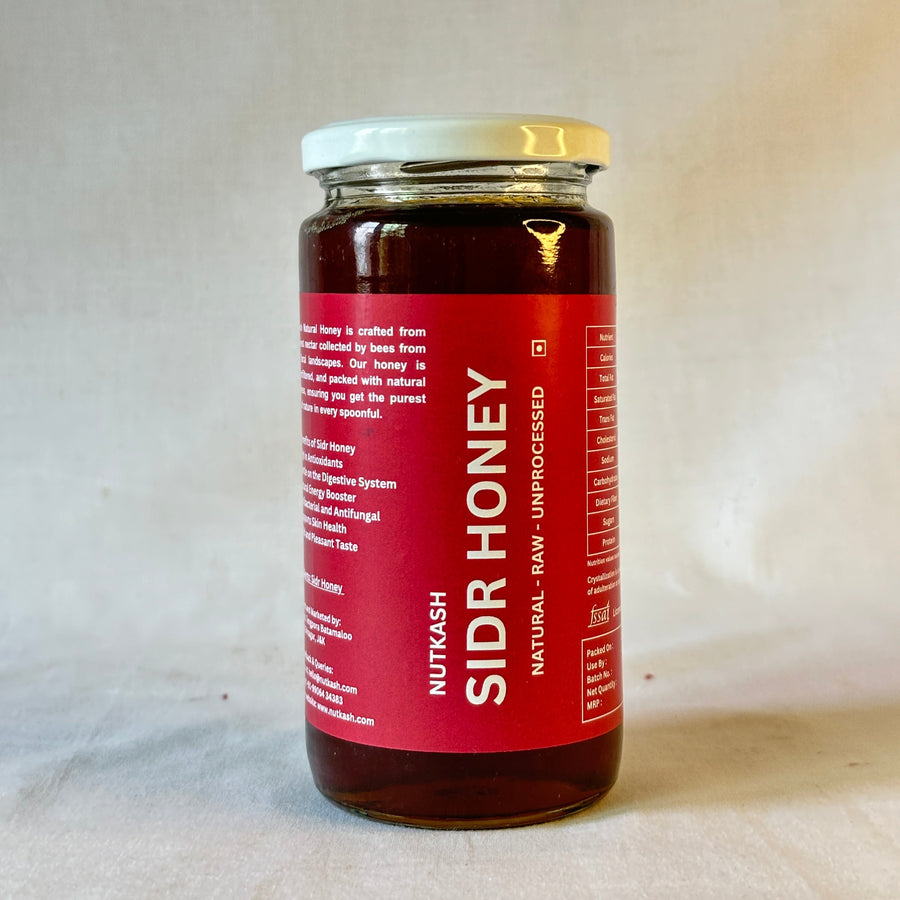
Sidr Honey — Kashmir | Raw | 500g
Sidr Honey — Medicinal Grade · Unani & Ayurvedic
5.0 · 1 verified reviewsDark, dense, medicinal. From Kashmir's Sidr orchards — one short harvest window, once a year.
Dark caramel, a hint of molasses, thick and slow to pour — Sidr honey tastes like no other honey because it comes from a tree that blooms for just a few weeks each year. Ours is from Kashmir's Sidr orchards, small-batch, never blended with regular honey. Used in Unani medicine for liver health, immunity, and male vitality for over 2,000 years.
Used in Unani medicine for liver and gut health for centuries. 1 tsp in warm water every morning before food.
Sidr blossoms for only a few weeks each year — this honey is the concentrated result of that short window. 1 tbsp daily when the seasons change.
Apply directly to cuts, cracked lips, or minor skin irritation. Thick texture stays in place — used for wound care in Kashmiri households for generations.
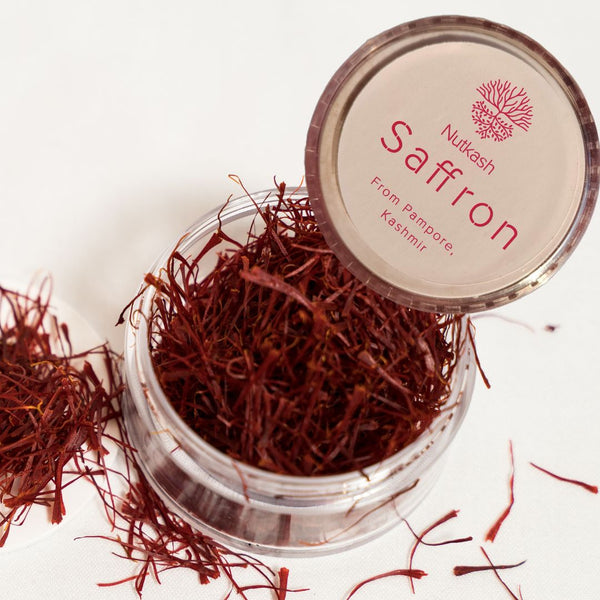
Traditional Unani formula for energy and vitality. Warm milk + a pinch of saffron + 1 tsp Sidr honey before sleep — consistent daily use for 4–6 weeks.
Why it works
Sidr honey has naturally high antimicrobial properties
- Sidr honey is known for its naturally high antimicrobial properties, making it one of the more potent honeys traditionally used for immune support.
- Lab studies show Sidr honey effectively fights common harmful bacteria including Staphylococcus and E. coli. These are lab results — but the traditional use of Sidr honey for healing has centuries behind it.
- Traditionally applied to minor skin concerns in Kashmiri households. Its thickness helps it stay in place longer.
Traditional throat and lung tonic
- Sidr honey has been used for centuries as a throat and respiratory tonic across South Asia and the Middle East.
- It is thick and dense — it coats your throat and stays there longer than thin honey. This is why it works well for sore throats and dry coughs.
- It has been traditionally used to soothe the throat and respiratory passages.
Minerals and natural energy in one spoon
- Sidr honey contains iron, zinc, and potassium — minerals your body needs during and after illness.
- It provides natural carbohydrate energy.
- Best used consistently over 2–4 weeks during or after illness, or during a period of heavy training.
Sidr honey has naturally high antimicrobial properties
- Sidr honey is known for its naturally high antimicrobial properties, making it one of the more potent honeys traditionally used for immune support.
- Lab studies show Sidr honey effectively fights common harmful bacteria including Staphylococcus and E. coli. These are lab results — but the traditional use of Sidr honey for healing has centuries behind it.
- Traditionally applied to minor skin concerns in Kashmiri households. Its thickness helps it stay in place longer.
Traditional throat and lung tonic
- Sidr honey has been used for centuries as a throat and respiratory tonic across South Asia and the Middle East.
- It is thick and dense — it coats your throat and stays there longer than thin honey. This is why it works well for sore throats and dry coughs.
- It has been traditionally used to soothe the throat and respiratory passages.
Minerals and natural energy in one spoon
- Sidr honey contains iron, zinc, and potassium — minerals your body needs during and after illness.
- It provides natural carbohydrate energy.
- Best used consistently over 2–4 weeks during or after illness, or during a period of heavy training.
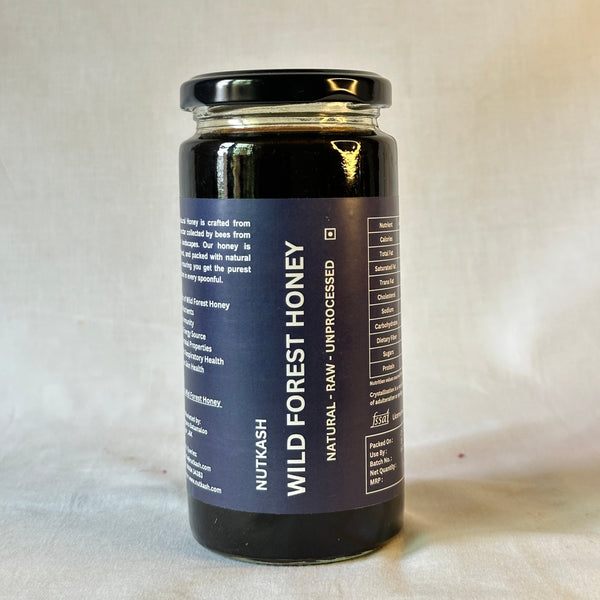
Dark, dense, complex — caramel and molasses with a richness that lingers. Unmistakably different from regular honey. The colour and viscosity are the first quality signals.
For seasonal sore throats, Sidr honey may help soothe due to its thick texture and traditional use. 1 tsp held under the tongue, or dissolved in warm water.
The antioxidant compounds in Sidr honey are best supported by regular daily use. Potential benefits depend on consistent consumption as part of an overall healthy diet and lifestyle.
Is this for you?
How to use it
Keep water below 40°C to protect the active compounds. Sidr honey is thick — it moves slowly off the spoon. That is normal.
Let 1 tsp dissolve slowly under your tongue before swallowing. This gives it longer contact with the throat lining.
Sidr honey thickens and may partially solidify in cool temperatures. This is normal and does not affect quality. Sit the jar in warm water to loosen it.
What customers say
Common questions
Browse the full range
View all →
 -31%
-31%
 -15%
-15%
 -10%
-10%
 -22%
-22%
 -25%
-25%
 -6%
-6%
 -25%
-22%
-25%
-22%
 -31%
-31%
 -13%
-13%