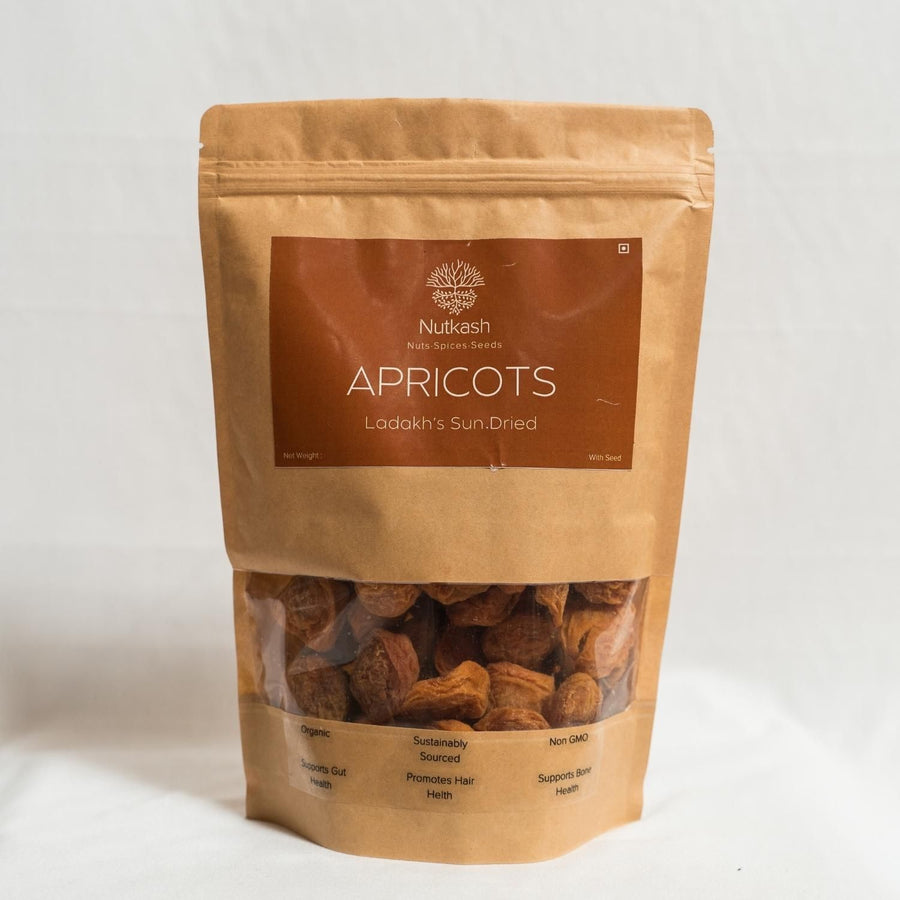
Sun-Dried Apricots — Ladakh | With Seed | 500g
Sun-Dried · Sham Valley · Ladakh
Dried on Ladakhi rooftops for 10–15 days. Brown, chewy, concentrated. No sulphites.
Ladakhi apricots are brown — that is how you know they are real. Orange ones are treated with sulphur dioxide. Ours are sun-dried for 10–15 days in Ladakh, nothing added — rich in iron, Vitamin A, and beta-carotene.
Bright orange = sulphur dioxide added. Brown = sun-dried and natural. The sulphur keeps colour bright for market appeal — nothing more.
Dried on rooftops and flat rocks in the Ladakhi sun for 10–15 days. No machines, no preservatives — just altitude and heat.
Beta-carotene from food is safe — your body converts only what it needs and doesn't store the excess. No upper limit applies when it comes from fruit.
A handful (40–50g) of dried apricots gives you roughly 20% of your daily potassium — the mineral that keeps your heart in rhythm and muscles working well.
What it does
Beta-carotene — safe Vitamin A from food
- Beta-carotene converts to Vitamin A — what your eyes need for low-light vision and your skin needs to stay healthy.
- Beta-carotene from foods is generally considered safe as part of a balanced diet.
- Even sun-dried and browned, the beta-carotene in these apricots is well-preserved.
One of the better plant sources of iron
- Dried apricots are one of the better plant-based iron sources — especially useful for vegetarians.
- The iron in dried apricots is better absorbed when you eat them with something acidic. Squeeze lemon on them, or eat with fresh fruit.
- Avoid tea or coffee right after eating them — these block iron absorption.
Natural fibre from sun-dried fruit — no additives, no concentrates.
- Dried apricots have both types of fibre — one slows sugar absorption, one keeps you regular.
- Traditional use as a gentle morning aid: soak 5–6 apricots overnight, eat in the morning.
- Natural sugar with fibre means steady energy — no crash like refined snacks.
Beta-carotene — safe Vitamin A from food
- Beta-carotene converts to Vitamin A — what your eyes need for low-light vision and your skin needs to stay healthy.
- Beta-carotene from foods is generally considered safe as part of a balanced diet.
- Even sun-dried and browned, the beta-carotene in these apricots is well-preserved.
One of the better plant sources of iron
- Dried apricots are one of the better plant-based iron sources — especially useful for vegetarians.
- The iron in dried apricots is better absorbed when you eat them with something acidic. Squeeze lemon on them, or eat with fresh fruit.
- Avoid tea or coffee right after eating them — these block iron absorption.
Natural fibre from sun-dried fruit — no additives, no concentrates.
- Dried apricots have both types of fibre — one slows sugar absorption, one keeps you regular.
- Traditional use as a gentle morning aid: soak 5–6 apricots overnight, eat in the morning.
- Natural sugar with fibre means steady energy — no crash like refined snacks.
Chewy, concentrated, deeply sweet — nothing like commercial dried apricots. No sulphite aftertaste. The brown colour is what real sun-dried looks like.
Soak 5–6 overnight, eat with walnuts in the morning. Blood sugar stays steadier than eating fruit alone. The iron from apricots absorbs better paired with Vitamin C — add a squeeze of lemon.
Dried apricots contain iron, which can contribute to a healthy diet. Energy levels depend on many factors. Consistent daily eating as part of a balanced diet is recommended.
Is this for you?
How to eat it
Pairs well with a handful of walnuts. Vitamin C improves the absorption of plant-based iron — pair apricots with citrus fruits or other Vitamin C-rich foods for best results.
Put 6–8 apricots in water before bed. Eat the softened fruit in the morning. A simple, traditional way to enjoy them.
Add to rice dishes, lamb curries, or chutneys. The sweet-tart element in traditional Kashmiri and Ladakhi cooking.
The soaking water tip
Don't throw away the water after soaking apricots overnight. Drink it — it's naturally sweet and carries potassium from the fruit. A small glass in the morning is a traditional Ladakhi ritual.
What customers say
Common questions
Browse the full range
View all →
 -31%
-31%
 -15%
-15%
 -10%
-10%
 -22%
-22%
 -25%
-25%
 -14%
-14%
 -6%
-6%
 -25%
-22%
-25%
-22%
 -31%
-14%
-31%
-14%
 -14%
-14%